Lore
The world of Eldervast.
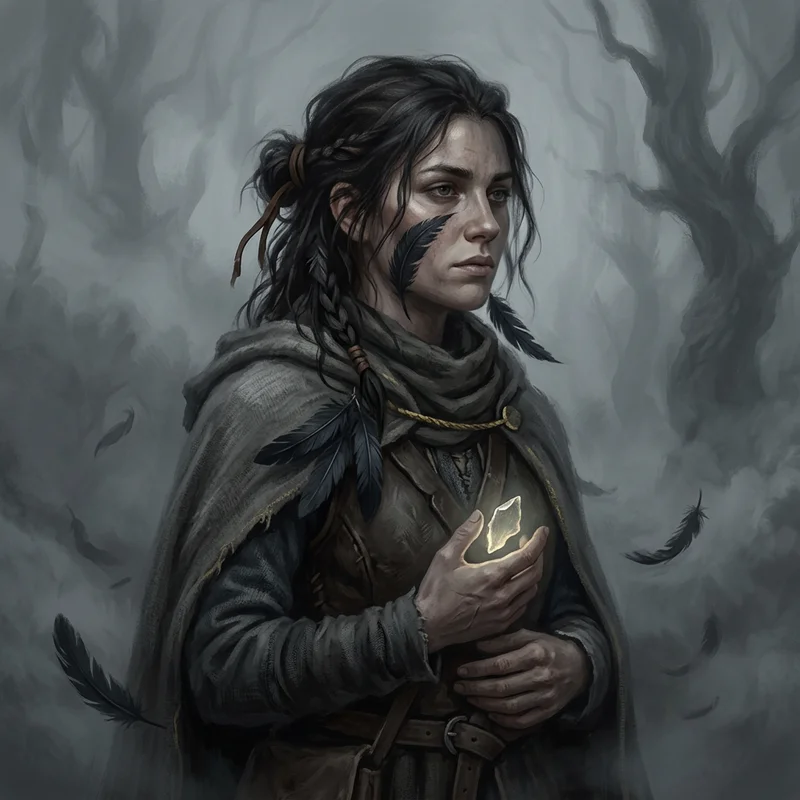
Every player character is a Mythraven — half blessed, half haunted, marked by a single raven-black feather-shaped scar from the shard of Mythstone they carry. That's the hook: you are the phenomenon the world fears and needs.
Tone: dark epic fantasy. Influences (tone/genre only, never copied directly): Dungeons & Dragons, The Lord of the Rings, Beowulf, Game of Thrones, Eragon, Tibia, Diablo, Path of Exile. Everything below is original — names, factions, and geography belong only to Mythraven.
Premise (one line)
Long ago the sky cracked and rained down raven-black shards of a shattered god — the **Mythstone** — and everyone who touches its power is changed by it, for better or worse.
The world: Eldervast
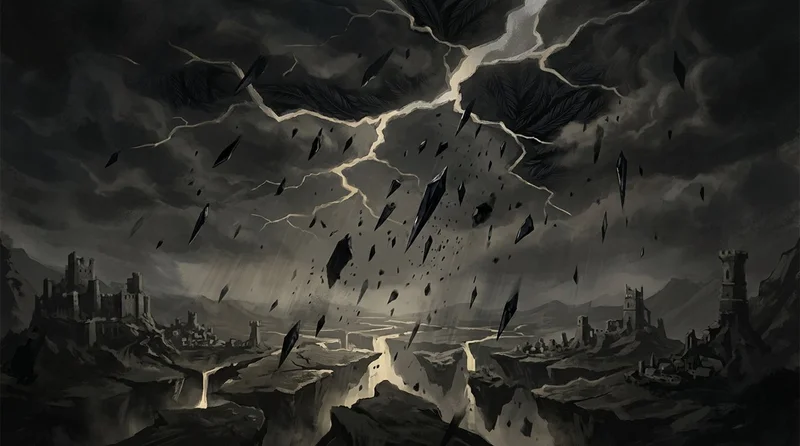
The Sundering — the night the sky cracked.
Eldervast was once a single realm ruled by the **Second Kindred**, a civilization that studied the Mythstone and tried to bind its power into law. They failed. The Sundering — the night the sky cracked — broke Eldervast into scattered regions, each soaked in a different flavor of corrupted myth-power, each now a hunting ground for adventurers strong enough to survive it. The ten regions of the game map (see `GAME_DESIGN.md` §4) are what remains: Eldenwood, the Black Mire, the Ashen Hills, and so on, each one a wound left by the Sundering, still bleeding monsters, magic, and treasure.
A **Mythraven** — the title the setting takes its name from — is not a rank or a monster. It's the old word for anyone who has taken a shard of the Mythstone into themselves and lived: half blessed, half haunted, always marked by a single raven-black feather-shaped scar. Every player character is a Mythraven. That's the hook: you are the phenomenon the world fears and needs.
The Second Kindred (what came before)
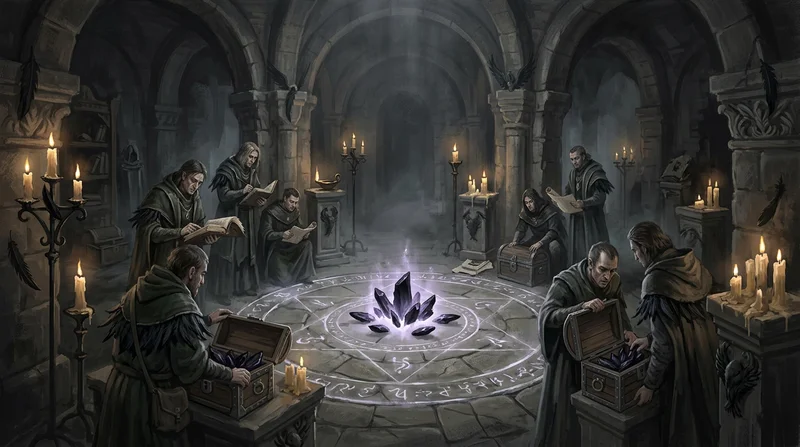
The Second Kindred, hoarding Mythstone shards in the years before their fall.
A vanished civilization of scholar-mages who nearly mastered the Mythstone before the Sundering destroyed them. Their ruins (dungeons, vaults, forgotten cities) are where the best crafting materials and lore fragments are found. They are not a playable faction — they're the reason the world looks the way it does, and the source of most "Ancient / Runed / Sundered"-flavor loot affixes.
Their downfall wasn't only ambition — it was **hoarding**. The Second Kindred didn't just study the Mythstone, they locked shard after shard away in private vaults, each scholar-lord certain their hoard should outweigh the others'. When the Sundering cracked those vaults open, that unchecked greed didn't just vanish with them — it curdled into something that still crawls through the world today.
Grasplings (the setting's original "treasure creature")
**Grasplings** are what's left of that greed given a body: small, cowardly, myth-touched scavengers born from the residue of the Second Kindred's hoarding, drawn to wealth and Mythstone-residue the way moths are drawn to flame. They never fight — they aren't built to. The instant a Graspling senses a real confrontation, its only instinct is to clutch whatever it's carrying and bolt. Region shapes them the same way it shapes everything else touched by the Sundering: a Graspling born near Kaldrath's Maw scorches the ground it flees across, one born in the Black Mire dissolves into fog — same creature, different corrupted-myth flavor per wound in the world (see `GAME_DESIGN.md` §5.1 for the full roster and mechanic).
Every Graspling caught is, narratively, a tiny piece of the Second Kindred's buried greed finally getting spent instead of hoarded — which is also why higher-tier Grasplings can carry real gear: the older and greedier the residue, the more it had crammed into its grasp before the Sundering caught it.
Orders (classes as in-world factions)
Each class is tied to an in-fiction **Order** that trained the character before the story starts. This gives every class a visual identity, a home region, and a reason to fight.
| Class | Order | Identity |
|---|---|---|
| Guerreiro / Warrior | **Order of the Iron Vow** | Frontline oathkeepers, shieldwall doctrine, believe strength is a duty owed to the weak. |
| Paladino / Paladin | **Ashen Communion** | Warrior-priests who took a shard of the Mythstone willingly, walk the line between blessing and corruption. |
| Arqueiro / Ranger | **Wardens of the Long Path** | Scouts and hunters of the border regions, first to map each new Sundering-wound. |
| Ladino / Rogue | **The Hollow Hand** | An unofficial guild of survivors, smugglers, and treasure-runners; loyalty is bought, not sworn. |
| Mago / Mage | **Circle of the Cracked Sky** | Descendants of the Second Kindred's scholars, obsessed with understanding the Mythstone rather than fearing it. |
| Clérigo / Cleric | **Choir of Embers** | Keepers of the old rites, tend to the wounded and the dying across every region, neutral in every regional conflict. |
The boss currency's fiction: Umbral Fragments
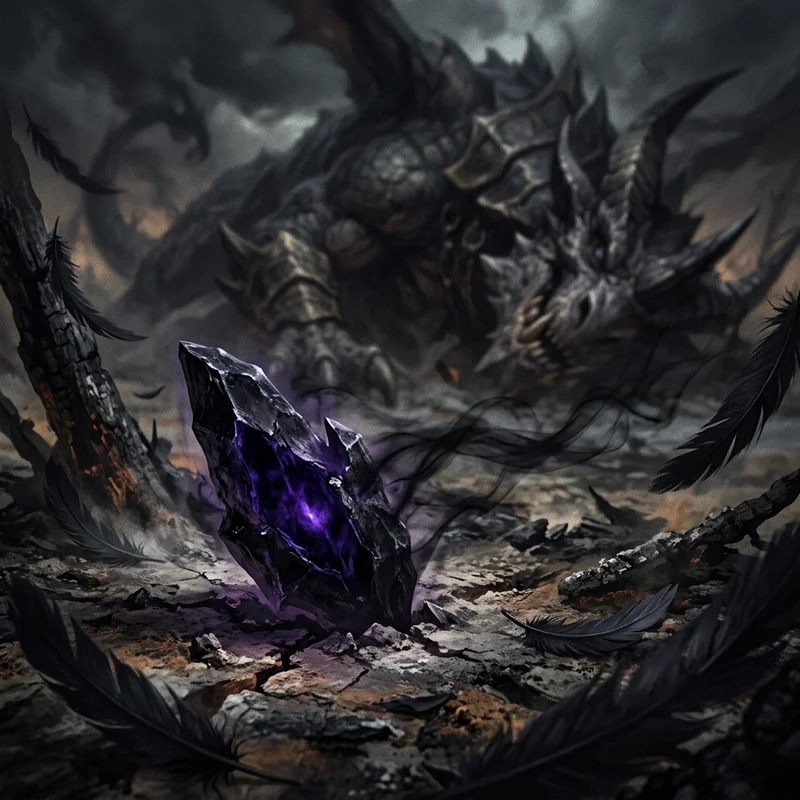
An Umbral Fragment — a splinter shed by a fallen region-boss.
Bosses are Sundering-wounds given a body — the strongest, oldest concentrations of corrupted myth-power in each region. When one falls, it doesn't drop gold, it sheds a piece of itself: an **Umbral Fragment**. This is the in-fiction justification for the boss-only currency in `GAME_DESIGN.md` §4.3 — it's not abstract game currency, it's a literal splinter of the thing the whole setting is about.
Naming conventions (for future content — monsters, items, maps)
- Regions: [Adjective] + [Nature noun] (Eldenwood, Black Mire, Ashen Hills) — evokes place, not proper names.
- Bosses: title + epithet (Hydra of the Lodo → **the Mire Hydra**, **the Ash King**, **the Hollow Choir**) — avoid generic "Dragon Boss #3" naming.
- Legendary items: named objects, not just "Legendary Sword" — e.g. **Oathshard**, **the Last Oath**, **Cinder-that-Remembers**. Each legendary should have one line of item flavor text tying it to a boss, region, or Order.
- Affixes (procedural items, `GAME_DESIGN.md` §4.1): keep to short evocative words — "of the Ember," "Sundered," "Ravenmarked" — so random rolls still read as part of this world, not generic RPG filler.
- **Common/elite monsters** (the 150+ roster, `GAME_DESIGN.md` §5): same template+variation logic as Grasplings and items — never hand-name 150 concepts individually.
- **Base creature type**: one evocative name per creature concept (e.g., "Timber Wolf," "Marsh Serpent") — the full list is below, ~5 per map.
- **Normal tier**: base name used as-is.
- **Veteran tier** (optional mid-roster filler, tougher stats, same drop family): [Intensity descriptor] + base name — e.g., "Savage Timber Wolf."
- **Elite tier**: [Corruption/region descriptor] + base name — same descriptor logic as Graspling coloring, ties the creature to that map's flavor of Sundering-corruption — e.g., "Corrupted Timber Wolf," "Elder Marsh Serpent."
- **Boss**: unchanged, title + epithet as above — bosses are never just "Elite [base name]," they get a unique epithet.
- This means ~50 base creature types (5 per map × 10 maps) × 2-3 tier variants each comfortably clears the 150+ target without writing 150 unique fantasy names.
Instagram content angle
Every social post is a "field report" from Eldervast, written like an in-world chronicle entry, not a marketing caption. Carousels = chapters of the Sundering's history and current events in a region; Reels = short combat/drop moments framed as "a Mythraven was seen at [region]..."; captions can quote in-world documents (a Warden's log, a Choir prayer, a Hollow Hand ledger). This is what makes the AI-generated art feel like lore instead of stock fantasy images — always caption from inside the world.
Open for later
- Name and fiction for the 10th/endgame region (Trono de Mythraven / Throne of Mythraven) — likely where the Second Kindred's last survivor or the source of the Sundering itself is found.
- Faction conflict/politics between Orders (useful for future PvP or guild content).
- A short glossary of in-world terms (Sundering, Mythstone, Umbral) to keep translators/writers consistent.